
Can a Private Driver in Morocco Also Act as Your Official Tour Guide?
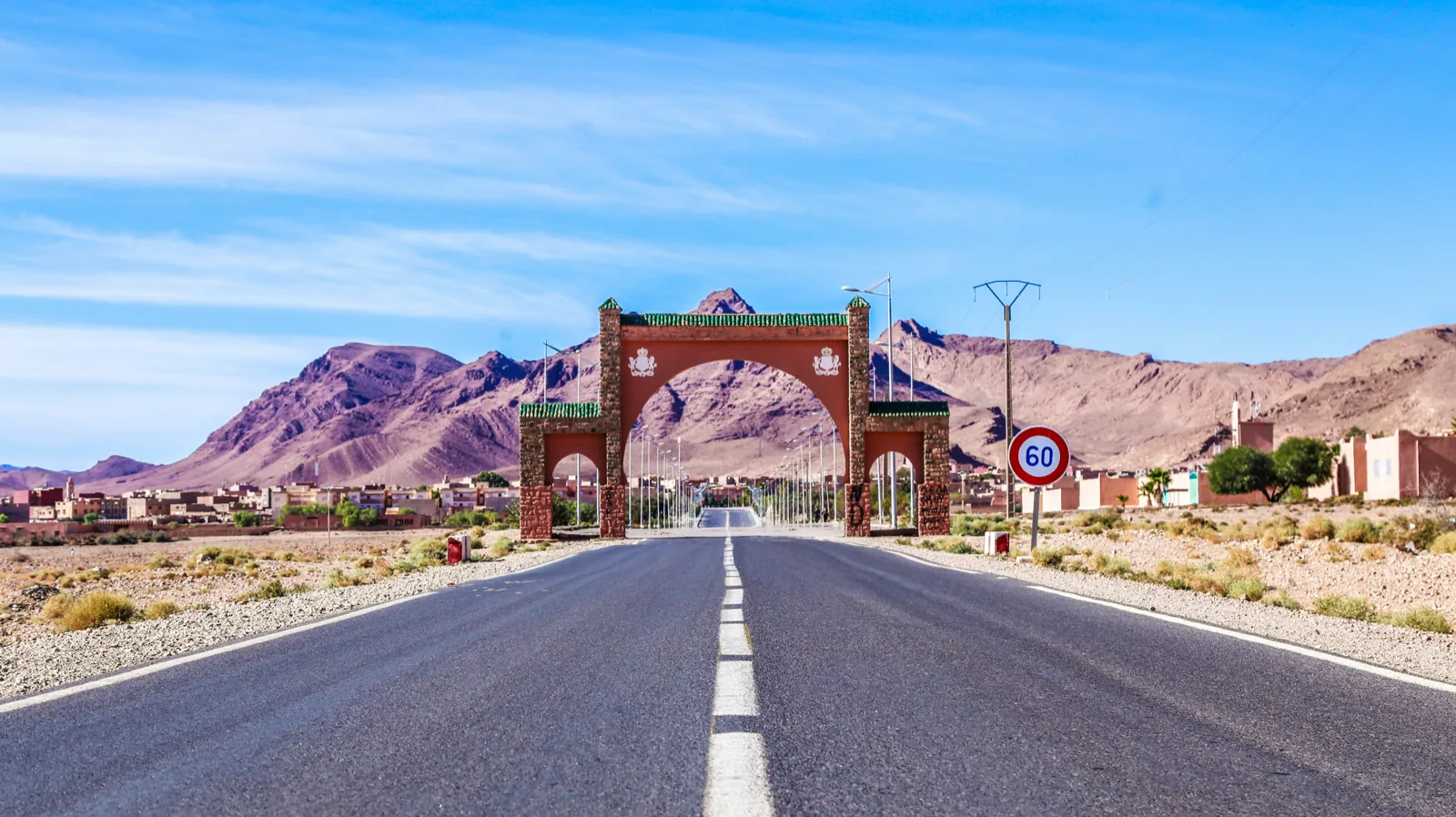
Here is a scenario that plays out daily in Morocco. A family books a car with a driver for a week, arrives at the medina gate in Fes, and expects the driver to walk them through the tanneries explaining what they are seeing. He declines. They assume he is being unhelpful, or trying to sell them something extra. He is neither. He is following the law, and if he did what they asked he could be fined and lose his licence.
The distinction between a transport driver and a licensed guide is one of the most misunderstood things about travelling in Morocco. Understanding it before you arrive will save confusion, protect your driver, and get you a much better experience at the historic sites.
The short answer
No. In Morocco, a private driver cannot legally act as your official tour guide inside monuments, museums and historic medinas. These are two separate, separately licensed professions, and the rules are actively enforced.
What your driver can do is considerable: drive you anywhere in the country, talk about history, culture, food and politics informally in the car, recommend where to eat, wait for you, and help you find the right entrance. What he cannot do is lead a guided visit through a regulated site.
Why Morocco separates the two roles
Morocco licenses tourist guides through a formal system. A licensed guide completes training in history, architecture and heritage, passes examinations, and holds a card tied to a specific region or speciality — Marrakech, Fes, the mountains, the desert. Guides are inspected, and their card is checked at monuments.
Transport is a different licence. Our drivers hold professional driving qualifications and our vehicles carry commercial passenger insurance. That authorises us to carry you safely; it does not authorise us to interpret a fourteenth-century madrasa.
Countries with dense heritage sites and large tourist volumes tend to regulate this way. It protects the standard of information visitors receive and protects licensed guides' livelihoods. Whether you find it excessive is beside the point — it is the law your driver operates under.
What actually happens if the rule is broken
Inspectors do check, particularly in Marrakech and Fes, and around Volubilis. If a driver is found guiding a group inside a regulated site, the penalty falls on him, not on you. Fines are significant relative to a driver's income, and repeat findings can cost him his professional licence.
Faux guides — unlicensed men who attach themselves to tourists at medina gates — are also actively policed, which is why you may notice your driver quietly steering you away from someone offering help.
So when a driver says "I will wait here and you go in with the guide", he is not withholding service. He is protecting his ability to work. A driver who agrees to guide you inside a monument is either misinformed or taking a risk you did not ask him to take.
What your driver genuinely does provide
It would be wrong to conclude that a driver is a silent chauffeur. On a multi-day trip he is the person who makes the country legible:
- Context on the road. Why the argan trees have goats in them, what the ksour along the Draa were for, how the Berber villages of the High Atlas are organised, what is growing in the fields.
- Route judgement. Whether the Tizi n'Tichka is clear, which gorge road is being resurfaced, when to leave to reach the dunes for sunset.
- Practical translation. Darija and often French, Spanish or English, at rest stops, fuel stations and hotels.
- Local recommendation. Where to eat that is not a tourist restaurant, which co-operative is genuine, which viewpoint is worth the stop.
- Access logistics. Which gate to use for your riad in Fes, where the coach must park, when a site closes for prayer.
In open landscape — the Dades and Todra gorges, the road to Merzouga, the Atlas passes — there is no regulated site and no restriction. Your driver can stop wherever it is safe and tell you whatever he knows. Most of the memorable explanation on a Moroccan road trip happens exactly there.
Where you will actually need a licensed guide
In practice, there are four or five places on a typical itinerary where hiring a licensed guide for two or three hours transforms the visit:
Fes el Bali
The strongest case anywhere in Morocco. Fes el Bali has thousands of lanes and no logical grid. Without a guide most visitors see the tanneries, one madrasa and the inside of several shops. With a good guide you understand a living medieval city. Half a day is the standard engagement.
Marrakech medina and the palaces
The Bahia Palace, the Saadian Tombs and the Ben Youssef Madrasa reward explanation. Marrakech is more navigable than Fes, so a half-day guide covering the monuments while you explore the souks alone afterwards works well.
Volubilis
The Roman site near Meknes has minimal on-site interpretation. Guides wait at the entrance and are licensed. An hour with one turns a field of stones into a functioning Roman town.
Ait Ben Haddou
The ksar is worth a guide if you care about how it was built and who lived there. Many visitors walk it alone and enjoy it as scenery, which is also fine.
How to arrange both without friction
The smoothest arrangement is simple and we set it up regularly:
- Book your car with driver for the whole route — airports, intercity legs, mountain passes, desert.
- For the two or three cities with major heritage sites, add a licensed local guide for a half day.
- Your driver delivers you to the meeting point, waits or parks, and collects you afterwards.
Tell us at booking which cities you want a guide in and what languages you need. We work with licensed guides in Marrakech, Fes, Meknes, Rabat and Ouarzazate and will quote the guide separately, at their rate, so you can see exactly what you are paying for.
Questions worth asking before you book
- Is the guide licensed, and can I see the card? A legitimate guide will show it without being asked twice.
- What languages does the guide speak, and to what level?
- Is the fee for a half day or full day, and does it include site entry? Usually it does not.
- Will the guide take us to shops? Say clearly in advance if you do not want shopping stops.
- Where exactly will the driver wait, and how do we reach him?
Avoiding faux guides
Unlicensed guides approach visitors at medina gates, at the entrance to monuments, and around busy squares. They are usually persistent rather than dangerous, and the standard outcome is a confusing walk ending in a shop that pays commission.
The defences are straightforward: arrange your guide in advance, decline politely and keep walking, do not accept unsolicited directions, and let your driver drop you as close to the site entrance as vehicles are permitted.
The bottom line
Your driver and your guide do different jobs, and the trip works best when you use both for what they are good at. The driver owns the road, the logistics and the country between the cities. The guide owns the two hours inside the monument.
If you are planning an itinerary and want help working out where a guide genuinely adds something, send us your route. We will tell you which stops warrant one and which are better explored on your own — and we will not add a guide to a day that does not need it.