
Renting a Car vs. Hiring a Private Driver in Morocco: Which is Better?
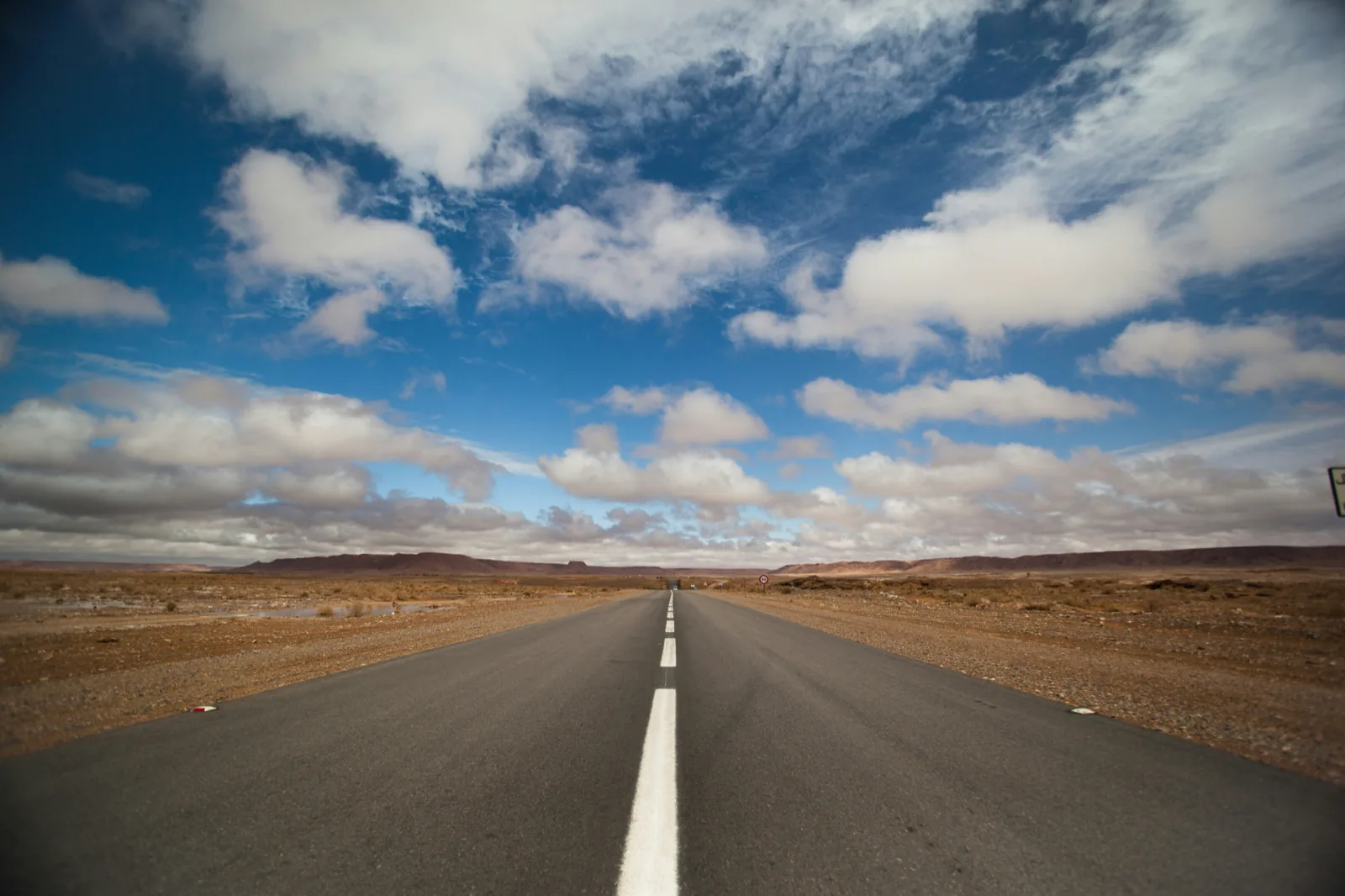
Almost every itinerary for Morocco reaches the same fork in the road. You have the flights booked, a rough list of cities, and then the question arrives: do you rent a car and drive yourself, or hire a car with a private driver? It is the single most consequential logistical decision of the trip, and the honest answer is that it depends on where you are going, how long you have, and how you want to spend your energy.
This guide compares the two options on the things that actually matter on the ground: cost, safety, stress, mountain passes, medina parking and flexibility. We run a fleet with drivers across the country, so we have a side in this, but we will be straight with you about where self-driving genuinely wins.
The cost comparison nobody does properly
Most travellers compare the headline daily rate of a rental car against the daily rate of a car with driver, see a big gap, and stop there. That comparison is misleading because the two numbers do not cover the same things.
A self-drive rental in Morocco typically quotes low and then adds up. You will usually pay for the base rate, collision damage waiver, theft protection, a young-driver or additional-driver fee, a one-way drop charge if you fly out of a different city, fuel, motorway tolls, and parking. Then there is the deposit, often held against your credit card for a substantial amount, and the fuel policy, which can quietly cost you a tank.
A car with a driver quotes higher but is close to all-inclusive. Our rates cover the vehicle, the driver, fuel, tolls and the driver's own accommodation and meals on multi-day trips. There is no deposit, no insurance upsell at the counter, and no drop fee when your route ends in a different city from where it started.
Do the arithmetic across a realistic week and the gap narrows sharply. For two people on a short city-based trip, self-driving is usually cheaper. For four people, or for any itinerary that crosses the Atlas or ends in a different city, the numbers are often close enough that the difference stops being the deciding factor.
Driving in Morocco: what it is actually like
Morocco drives on the right, road signs are in Arabic and French, and the motorway network between Casablanca, Rabat, Marrakech, Fes and Tangier is modern, well surfaced and genuinely pleasant. If your entire trip runs along that spine, self-driving is straightforward and we would not talk you out of it.
The difficulty is everywhere else. City traffic operates on assertive, close-quarters negotiation rather than lane discipline. Roundabouts near the ramparts of Marrakech work on eye contact. Scooters, handcarts, calèches and delivery vans share the same space. None of this is dangerous for an alert driver, but it is tiring in a way that a week of holiday driving at home is not.
Mountain passes are the real dividing line
The Tizi n'Tichka pass on the N9 between Marrakech and Ouarzazate climbs to 2,260 metres across roughly thirty kilometres of switchbacks, with sections of ongoing roadworks and drops that concentrate the mind. It is a spectacular drive and a demanding one. In winter it can close for hours after snow.
The same is true of the Rif roads to Chefchaouen, the climb from Agadir up the Tamraght valley to Paradise Valley, and the long descent through the Ziz Gorge from Midelt. Our drivers run these routes weekly, know the state of the surface and where the safe stopping points are, and adjust departure times around weather. That is the single strongest argument for a driver.
Parking and the medina problem
The historic medinas of Marrakech, Fes and Tangier are closed to traffic. Fes el Bali in particular is a network of thousands of lanes narrower than a loaded donkey. You cannot drive to your riad. You can only drive to the nearest gate.
Self-driving means finding that gate yourself, in traffic, then finding somewhere to leave the car for several days, then walking to accommodation you have not yet seen while navigating unfamiliar alleys with luggage. Every street has an informal parking attendant expecting a small fee; hotel car parks fill early.
With a driver, the car simply stops at the right gate, the bags come out, and the vehicle disappears until you need it again. Tell us the riad name when you book and we choose the gate that gives the shortest walk. It sounds like a small thing. On arrival day, after a flight, it is not.
Flexibility: the argument for self-driving
Here is where self-driving genuinely wins. A rental car is yours at three in the morning. You can change your mind at a junction, stop for an hour because the light is good, sleep in and leave at noon, or abandon the plan entirely and drive to the coast.
A private driver is enormously flexible within a day, but it is a booked arrangement. You agree a route, and while our drivers will happily add a stop or wait while you linger, the trip has a shape agreed in advance. If total spontaneity is the point of your holiday, rent the car.
The counter-argument is that a driver buys you a different kind of freedom. Nobody in the group has to concentrate. Everyone looks out of the window. You can have a long lunch with wine. On a route like Marrakech to Merzouga, which is around nine hours of driving each way, that difference is the whole experience.
Safety, breakdowns and the things that go wrong
Morocco is a safe country to drive in by the standards of the region, but the failure modes are different from home. Speed enforcement is frequent and strict, with fixed and mobile checks on the roads to Agadir, Essaouira and Casablanca. Fines are payable on the spot. Rural roads carry livestock, unlit carts after dark and pedestrians on the carriageway.
Night driving outside cities is the one thing we would advise every visitor against, whichever option you choose. Unlit vehicles, animals and unmarked roadworks make it disproportionately risky.
If a self-drive car develops a problem in the pre-Sahara, you are managing it in a second language with a rental company several hundred kilometres away. With a driver, a breakdown is his problem, and the network of people who fix things quickly is his network.
So which should you choose?
Rent a car yourself if…
- You are staying mainly on the motorway spine between the big cities
- You are a confident driver in unfamiliar conditions and enjoy driving
- You are travelling as a couple and cost is the deciding factor
- Spontaneity matters more than comfort
- You are basing yourself in one place for a week rather than moving daily
Hire a car with a driver if…
- Your route crosses the High Atlas, the Rif or heads to the desert
- You are four or more people, where the per-person cost gap closes
- You are moving city to city with luggage and medina accommodation
- You are travelling with children, elderly parents or on a tight schedule
- You want the days to be about the country rather than the road
A middle path most people miss
You do not have to choose once for the whole trip. A common and sensible pattern is to take the train between Casablanca, Rabat and Marrakech, then hire a car with a driver only for the legs where it earns its keep: the Atlas crossing, the desert run, the Rif. City days need no vehicle at all, because the medinas are walkable and taxis are cheap.
Book a driver for the four days that cross mountains, and you get the safety and comfort where it matters without paying for a car to sit outside a riad while you wander Fes on foot.
Practical next steps
If you are leaning toward a driver, the things worth settling before you book are the vehicle size, the language you want him to speak, and whether your itinerary is one-way. A 4x4 makes sense for mountain and desert routes; a van is better value for families and groups with luggage.
Read what previous travellers say on our reviews page, look at the fixed prices for your route, and send us your dates. We will tell you honestly if we think the train or a rental car would serve you better on part of it.